MMIDSP Issues Urgent Warning of Concurrent Mpox Cluster and Expanding HIV Crisis; Demands Comprehensive Infection Control and Blood Safety
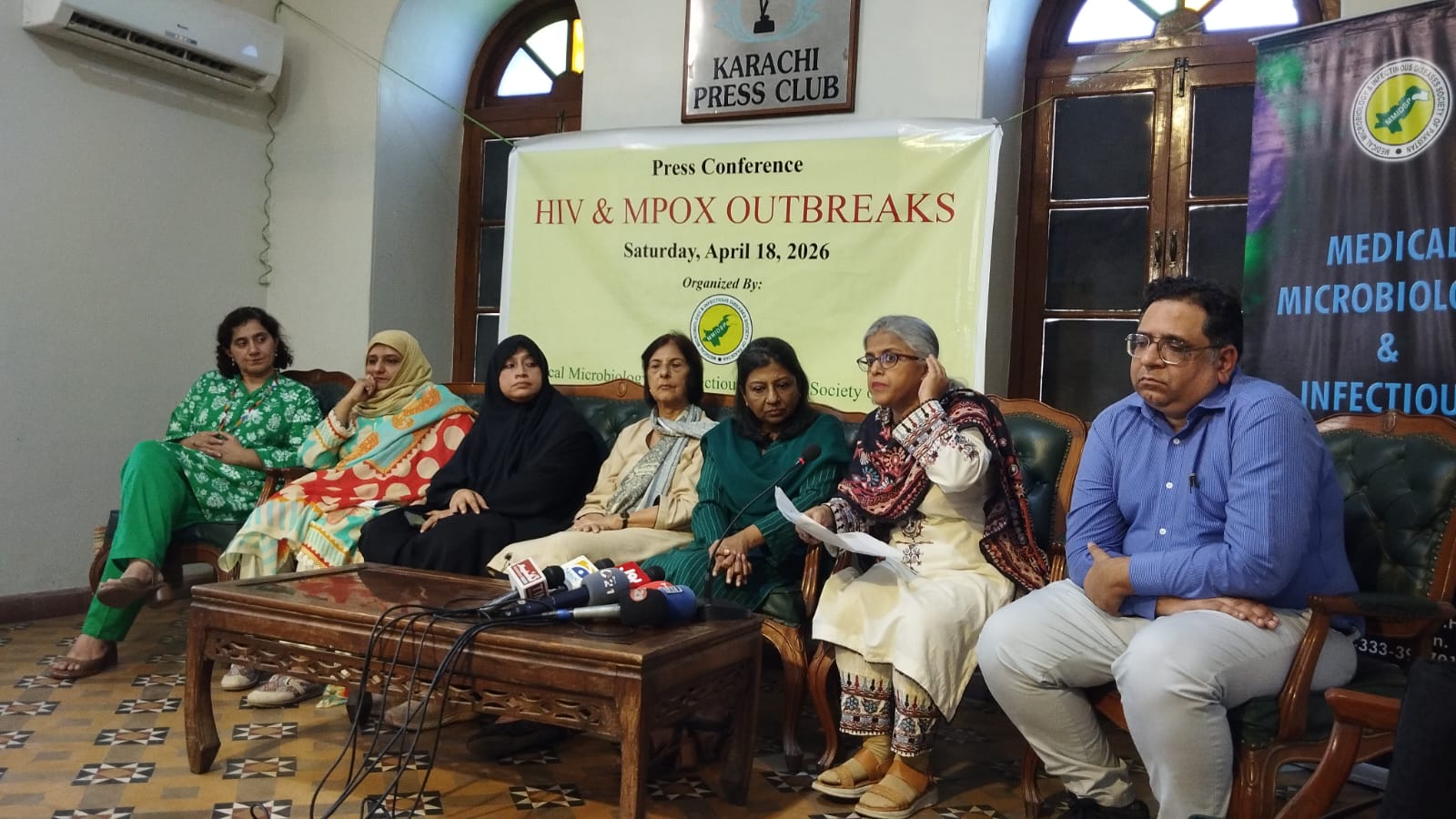
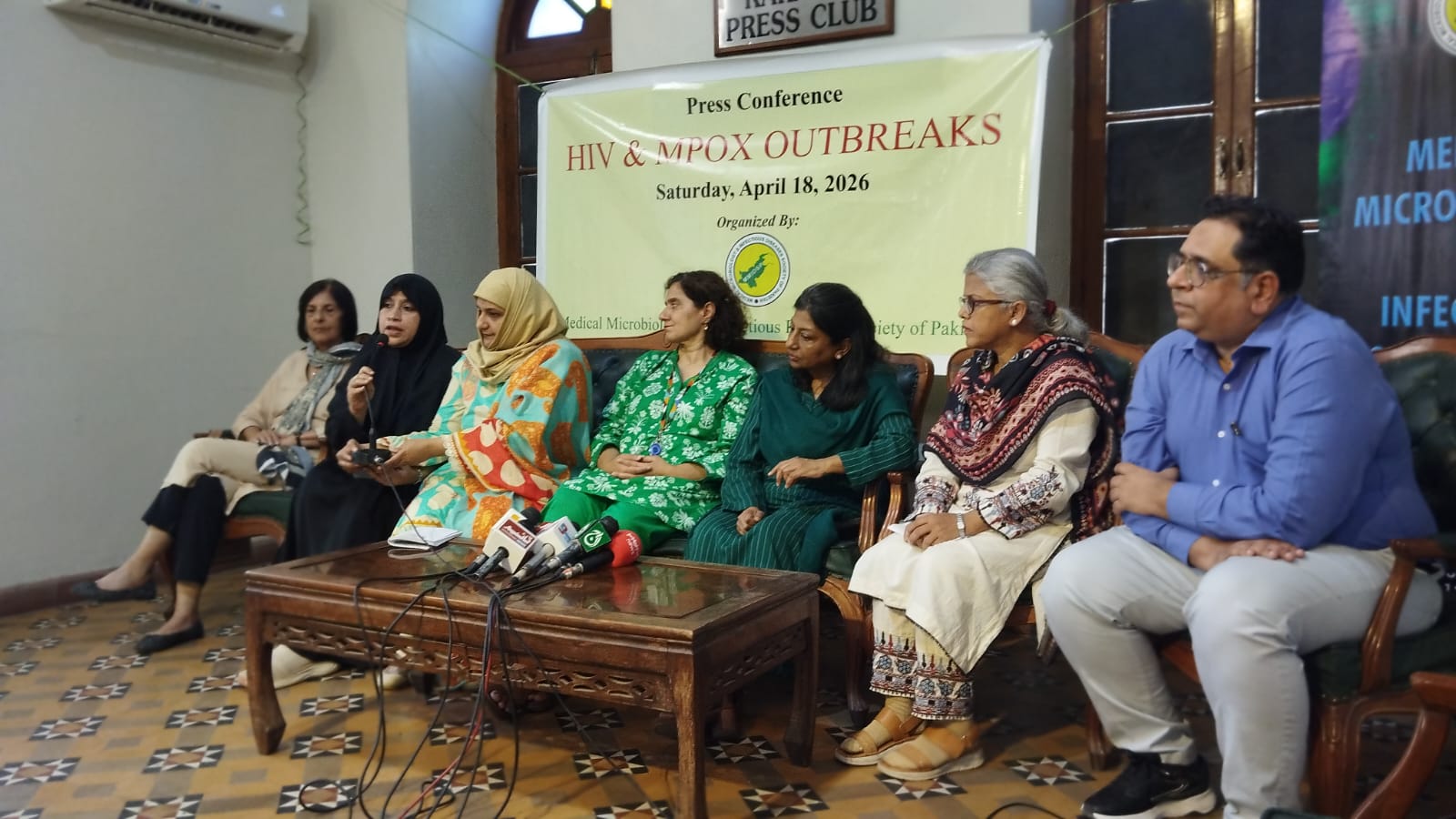
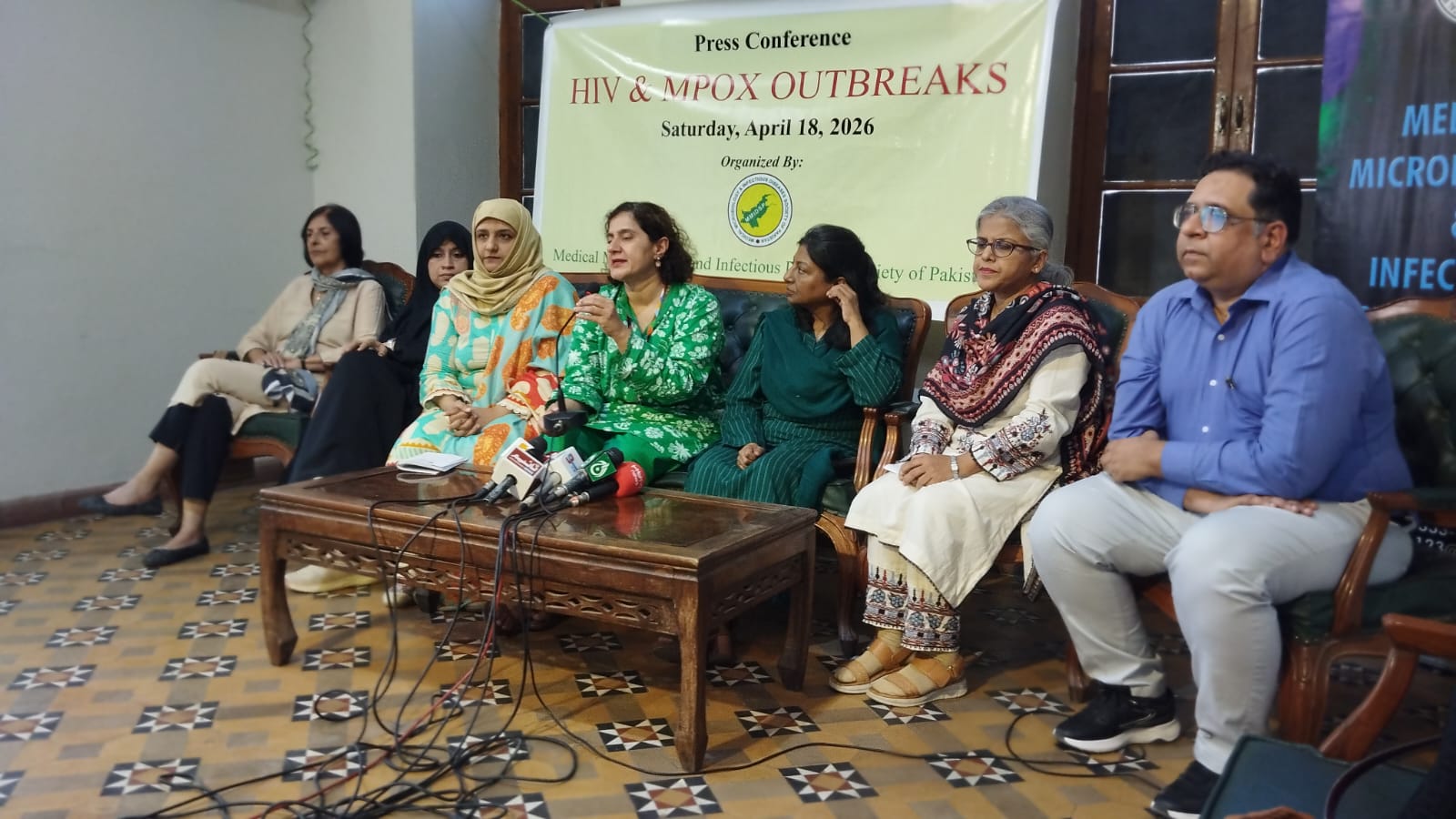
KARACHI, April 18, 2026: The Medical Microbiology and Infectious Diseases Society of Pakistan (MMIDSP) has issued an urgent warning that Pakistan faces two overlapping public health emergencies: Mpox outbreak disproportionately affecting neonates and very young children, coupled with an escalating national HIV crisis driven largely by health care associated transmission. The society has called for immediate government intervention to address systemic failures in infection prevention and control (IPC), unsafe injection practices, and inadequate blood safety protocols that have enabled these crises to flourish.
Speaking at a press conference Saturday at the Karachi Press Club, the MMIDSP leadership comprising of health experts from the public and private health sector emphasized that breaches in basic infection control practices are allowing multiple pathogens to spread rapidly within healthcare settings, creating dangerous conditions for vulnerable populations.
Dr. Asma Nasim, Professor and Head of the Department of Infectious Diseases at Sindh Institute of Urology and Transplantation, Karachi Pakistan, moderating the press conference said that early reports indicate possible hospital borne Mpox spread with paediatric mortalities, while recurrent healthcare-associated HIV outbreaks—including the devastating paediatric catastrophe in Ratodero, Sindh, clusters in Taunsa, Punjab, and dialysis-linked cases across the country—demonstrate a pattern of preventable transmission tied directly to unsafe medical practices.
Immediate Reforms Required to Combat Healthcare-Associated Infections
The MMIDSP addressing Prime Minister Mr. Shahbaz Sharif and Health Minister Mr Syed Mustafa Kamal, has outlined seven critical areas demanding immediate government action. Primarily, Pakistan must enforce a single-use syringe policy nationwide and mandate auto-disable syringes in all healthcare settings, while simultaneously banning conventional disposable syringes from private markets. This foundational reform is essential to prevent the reuse of contaminated equipment that has repeatedly driven outbreaks. Complementary to this mandate, the government must implement strict legal and disciplinary action against healthcare facilities responsible for health care associated transmission, with mandatory institutional outbreak investigations to establish accountability and identify systematic failures before they spread further.
Blood safety remains another critical vulnerability requiring immediate remediation. The MMIDSP demands that Pakistan ensure 100 percent screening of all blood transfusions using WHO-recommended tests for HIV, hepatitis B, and hepatitis C. Additionally, the nation must eliminate both professional and unregulated donors, establish a nationwide voluntary blood donor programs with proper oversight of private blood banks that currently operate with insufficient regulation. These measures are not optional enhancements but essential protections against preventable transmission that has caused immense suffering, particularly among children who received transfusions for routine medical needs.
Strengthening institutional capacity and oversight is equally urgent. Dr. Asma Nasim emphasized that healthcare regulation must be expanded to integrate and properly regulate private healthcare providers while simultaneously cracking down on unauthorized practitioners who operate without proper training or facilities. Surveillance systems must be strengthened to enable mandatory reporting of all healthcare-associated HIV and hepatitis cases, supported by rapid outbreak response teams capable of swift investigation and containment. Finally, healthcare workers themselves require comprehensive support through prioritized infection prevention and control training, adequate personal protective equipment provision, and accessible post-exposure prophylaxis following potential occupational exposure incidents.
The Mpox Crisis Affecting Pakistan’s Most Vulnerable
Dr. Fatima Mir, Professor of Paediatric Infectious Diseases at Aga Khan University Hospital and MMIDSP member, stressed the gravity of the paediatric Mpox situation: “Mpox outbreak among children and neonates presents an urgent crisis requiring immediate action. Reports indicate an outbreak of Mpox among neonates with documented mortalities, and this outbreak appears to be nosocomial in origin. We must inform the public about this disease and enforce preventive measures, with good infection control being the most critical intervention.”
Mpox, formerly known as monkeypox, is caused by the monkeypox virus from the Orthopoxvirus genus. The disease exists in two main genetic clades and transmits through close contact including skin-to-skin contact, sexual contact, mouth-to-mouth exposure, and face-to-face respiratory contact, as well as through contaminated objects and animal contact. The disease typically manifests with painful skin or mucosal lesions lasting two to four weeks, accompanied by fever, headache, muscle aches, and swollen lymph nodes. Severe complications can include pneumonia, sepsis, and vision loss, with particular danger to children, pregnant people, and immunocompromised individuals.
Dr. Farheen Ali, Professor of Infectious Diseases at NICVD and MMIDSP member, noted that community transmission patterns have emerged: “The recent Mpox outbreak represents a significant concern, particularly because some patients presented with no travel history, indicating community transmission has begun. While Mpox is generally not a fatal disease, it can cause mortality in immunocompromised persons. Our priority must be increasing public awareness, enabling prompt diagnosis, and implementing rigorous infection control measures.”
PCR testing of skin lesions serves as the diagnostic standard, while management remains primarily supportive. Vaccines exist for targeted pre- and post-exposure prevention, offering a tool that should be deployed strategically among at-risk populations and healthcare workers.
The Escalating HIV Crisis and Healthcare-Associated Transmission
Pakistan’s HIV situation has deteriorated dramatically over the past 15 years. Since 2010, the nation has experienced a 4.3-fold increase in people living with HIV, reaching an estimated 350,000 by 2024. Even more alarming, AIDS-related deaths have surged 6.4-fold during this same period. These statistics represent not merely epidemiological trends but individual tragedies—families devastated, children orphaned, and communities fractured by a disease that should be increasingly preventable.
Dr. Samreen Sarfaraz, Consultant Infectious Diseases at The Indus Hospital and Health Services, explained the role of unsafe medical practices: “The HIV outbreak situation in Karachi hospitals demonstrates that safe injections and safe blood are urgently needed. Recent HIV outbreaks among children in Karachi have highlighted critical gaps in healthcare delivery. Following the pattern established by the 2019 Larkana outbreak and subsequent outbreaks across Pakistan, the current crisis traces directly to unsafe blood and unsafe injections. We demand strict, practical action from the government to implement safe injection practices and safe blood protocols. MMIDSP is planning educational sessions on safe injection practices and will actively engage doctors across all specialties to enforce these practices.”
The Ratodero outbreak of 2019 exemplifies the consequences of systemic failure. Over 1,000 children were infected, most having received medical injections in the prior year. More recent clusters—including dialysis unit outbreaks and a November 2025 cluster in SITE Town, Karachi—demonstrate that the underlying problems remain unresolved. Unsafe injections, syringe reuse, inadequate sterilization, and unregulated blood transfusions continue to drive transmission. Weak surveillance, low diagnosis and treatment coverage, and inconsistent enforcement of existing policies such as the National Action Plan for Injection Safety create persistent vulnerabilities.
Call for Unified Medical Response and Public Awareness
Dr. Naseem Salahuddin, Professor Emeritus at The Indus Hospital and Health Services and Founder and Ex-President of MMIDSP, emphasized the urgency of government commitment: “The outbreaks of HIV and Mpox have exposed the serious paucity of infection control measures in our hospitals. Immediate and urgent government action is essential to prevent infectious disease spread. Education, training, and enforcement of good infection control practices among healthcare workers is paramount. Strict enforcement of hand hygiene, safe injection practices, and environmental cleaning represents an emergency requiring now.”
Dr. Fivzia Hareker, Consultant Internal Medicine at The Indus Hospital and Health Services, called for unified action: “We must act in unison, involving all medical and surgical societies while increasing awareness and training. The magnitude of this problem is enormous, and HIV’s impact creates lifelong consequences with widespread collateral damage. This is a time for the entire medical fraternity—physicians, nurses, and healthcare workers across all levels—to stand together to not only manage this catastrophe but more importantly prevent its spread. This crisis cannot be halted through safe practices and education alone.”
The MMIDSP’s warnings come at a critical juncture. Pakistan possesses the knowledge, resources, and expertise to prevent these healthcare-associated outbreaks. What remains lacking is the political will and institutional commitment to implement proven interventions consistently across the nation’s healthcare system. The time for incremental responses has passed; comprehensive, urgent reform is now essential, the society stressed.
The MMIDSP is committed to disseminate awareness and knowledge within the communities regarding communicable diseases and their prevention. Our members consist of highly qualified Infectious Diseases physicians, Clinical Microbiologists and nurses who are trained in Infection Prevention and Control. MMIDSP is duly registered under the Societies Registration Act 1860.
